
Host Natural Building Courses & Workshops | One Regeneration
Updated: Jul 29
Information for partners engaging One Regeneration to stage an experience.

This information guides partners on the types of courses and experiences we can organize as a paid service. If you simply want to propose an idea or co-create a concept, recach out to us directly.
Natural Building Experiences bring people into direct connection with the materials, techniques and traditions of ecological construction around the world. These experiences give the opportunity to learn by working with real materials, studying the concepts and theory behind natural building techniques, and collaborating on a shared project that nurtures our creativity. Use this information to understand our offerings and cost structure.
What We Offer
Intro Natural Building Workshops (1-3 Days)
These short immersions introduce the essentials of natural building. Participants meet the materials, learn core concepts, and help build a small project or set of sample elements. 2-3 Day Workshops are an ideal blend of theory and practice that allow participants to develop more confidence with specific techniques (such as mixing, shaping, plastering) while completing a small project.
7-10 Day Natural Building Courses
A foundational natural building course in which we experience the different stages of the building process and learn hands-on skills. Participants move from raw materials to preparing mixes, construction, and final finishes, often grounded in a tangible group project. Participants develop wider knowledge of different natural building techniques, material behaviours and best practices while gaining life-long practical skills. These formats normally include one or more rest days during the course.
2–4 Week Natural Building Courses
An intensive natural building program that blends theory and practice, designed for people who want to build proficiency and follow the full cycle of the natural building process. In these programs, participants can work on a more ambitious project or structure in order to understand the components of a build from start to finish. These formats normally include one or more rest days during the course.
Natural Building Project Partnerships
We enjoy creating dedicated teams that join a partner or host to execute a building project while running a learning program around it. This relationship is ideal for sites wanting a high-impact outcome and deeper capacity building and for participants who want an extended opportunity to practice on an ongoing basis. The nature of these formats vary widely, and can involve several different smaller offerings - including volunteer days and workshops. We are open to partnerships with individuals who want to join existing projects and with hosts who want to create projects.

Project Types & Examples
Our experiences typically involve projects that allow participants to create something real and that leaves a lasting positive impact in a space. Here are examples.
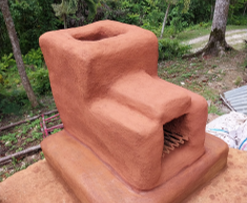 | Earthen Cookers & Ovens Earthen ovens, rocket stoves, and outdoor cooking features that serve as both functional tools and opportunities to practice many skills of natural building on a small scale. |
 | Small Functional Structures Benches, counters, seating alcoves, half-walls, miniature houses, and other small forms that demonstrate structural shaping and finishing techniques without the investment of an entire building. Almost all key techniques can be taught via small structures. |
 | Decorative & Artistic Elements Sculptural reliefs, carved forms, murals, and natural paint designs. These projects are ideal to practice mixing and plastering techniques as well as showcase the design and artistic elements of natural building |
 | Wall Systems, Floors & Structural Elements True structural elements that are often intended to be part of permanent structures. These include techniques using cob, adobe, wattle-and-daub or earthbag. Projects can be entire walls, wall segments, floors, and other structural elements |
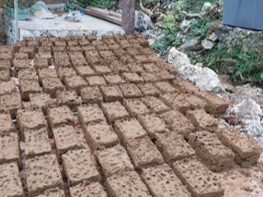 | Material Production & Batch Elements Production of batches of bricks, plasters and paints, pigments, and more. Creating a consistent batch of a single element is an important and very rewarding skill that quickly builds skill and discipline. |
What Participants Learn
Participants learn to:
Work confidently with natural materials such as clay, sand, fibers, and lime
Explore global building traditions and how they apply in different local contexts
Build structures (small or large) that are durable, safe, and healthy
Create natural paints, plasters, pigments and finishes for structures of any size.
Run tests to assess soils and transform many elements into building materials
Integrate recycled materials such as bottles, tyres, and plastic into building
Use techniques like cob, adobe, wattle and daub, earthbag, and lime plastering
Have fun, reconnect with the earth and use the whole body to create beauty.
Partnering with Us
What we manage:
Our team handles teaching, facilitation, and (if necessary) the design process. Together with the host, we plan the site layout, material needs, and flow of activities.
What partners manage:
Our partners fund the costs of the experience, are responsible for the material costs (either on their own or through us), the preparation of the location, and clear communication. We prefer to partner with people who are practical and hands-on, committed to regenerative approaches, and aligned with the learning process.

Costs
Every Natural Building experience includes a set of core components. We have a set of flexible cost ranges that help to project the true cost of an experience and avoid surprises. Through dialogue, we’ll agree on the scope and set the cost.
Cost structure:
Base Fees – Our costs for staging the experience
Material Costs – Any costs for materials and tools
Transportation & Accommodation (if needed) – the costs to transport our team
Additional Services (if needed) – any specific extra services you agree to
Base Fees
1-Day Intro Workshop — US $1,000
2-3 Day Intro Workshop — US $1,500 - $1,750
7–10 Day Course — US $3,500 - $5000
2-4 Week Course — US $7,500–$10,000
Our team normally consists of 2-3 people who design, organize, and deliver the experience. Group size: up to 20 people. For groups larger than 20, we can agree on an additional price.
Funding models:
Experiences can be funded in two ways:
Option 1: Host pays - The host pays the full fees directly to us. This is normally straightforward. The host can then charge participants separately if they desire.
Option 2: Participants pay - Participants pay individual fees to us to cover the base fees (at minimum), provided the number of participants is sufficient. This requires some planning.
Base Fees Cover:
Planning and coordination leading up to the experience, including support for budgeting and identification of materials. Our full attention and partnership.
Facilitation of theory and practical sessions during the experience
Access to online learning resources and tutorial videos
Project design (if needed)
A tangible group project (if possible)
Access to our network, community, and opportunities to remain involved
Material Costs
Materials are provided by the host unless we agree to provide them. As much as possible, we try to work with materials already available on the site or in close proximity. During planning, we will provide the quantities and provide guidance on sourcing. If needed, we can manage the sourcing or materials. Common materials include:
Clay (soil) – harvested from the soil site or from another location
Sand - harvested locally or bought from supplier
Lime - normally purchased from a supplier.
Fiber (straw, grass, plant fiber) - varies considerably and may require preparation in advance
Pigments, binders, and additives - both made in workshop and purchased from suppliers depending on the project (e.g. linseed oil)
Access to a vehicle for local movement of materials is strongly recommended and in some cases may be necessary. If we have one, we will utilize it.
Transport and Accommodation
In some cases, transportation and accommodation will be required.
Transportation: Air and ground transportation for the team to arrive at the site. In some cases, access to a vehicle may be necessary if considerable movement is needed. This cost is location-dependent.
Accommodation: If accommodation is needed, then it is either provided by the host or part of the budget for our costs (average US $50 per night per person). If needed, we assume accommodation at least 1 day before and 1 day after the experience. This additional day supports finishing touches, recovery of materials / tools, etc.

How to Build Your Budget
A typical experience is calculated by adding:
Base fees
Material costs (host-provided or sourced)
Travel and accommodation for the team
Additional services (if needed)
What a location needs to host an experience:
Here are the ideal conditions for hosting a Natural Building Experience. Many sites may not begin with everything in place, so don’t feel intimidated. We can help create the right environment and guide site preparation ahead of time, even in challenging settings. *We may assist directly with setup, material sourcing and tools. However, it may involve additional days and costs.
A suitable work area
Enough space for the number of participants to work comfortably
Suitable ground conditions or the ability to make them suitable (walkable, doesn’t flood, not too steep).
Shade or the potential to create shade (trees, tarp, tent, or simple structure) for sun and rain protection. *We can create shaded areas if needed.
Space for storing and moving materials.
Covered storage containers or tarps are helpful. *If you do not have these, we may provide / source them
Space for Learning & Group Time
A basic covered area for teaching, breaks, and group activities—or the potential to create one. We can help construct a simple shelter. This may require extra preparation time.
Simple seating such as chairs, benches, or mats. We can help make these if needed
a surface for notes and drawings (recommended, but not essential) such as a large table, wall, or board). We can supply if needed.
Access to electricity (optional).
Water & Basic Facilities
A reliable water source for mixing materials and washing tools.
Drinking water for participants.
At least one toilet or bathroom arrangement suitable for the group.
A plan for snacks or meals (on-site, nearby, or coordinated by the host).
Materials & Tools
A potential clay/soil source on or near the site (even if untested).
Possibly, access to sand (local supplier or natural source).
Possibly, a fiber sources: straw, grass, coconut husk, agro-waste, shredded plant matter, etc.
Basic hand tools and containers, such as: shovels, buckets, wheelbarrows, tarps.
*If needed, we can supply tools or materials. This may involve additional costs.
People Support
At least one primary contact person who is consistently present, responsive, and able to coordinate on-site.

Getting Started
To start creating a natural building experience, please reach out to us. We appreciate knowing:
Location
Preferred date range
Type of experience (2-3 day, 10-Day Course)
Project vision (if you have one)
The first step will be to have dialogue to align on an approach and start the planning process.


Comments