
Embracing Regenerative Ocean Farming: The Future of Sea Moss Cultivation
Updated: Jun 5
Why Shift to Farming Sea Moss?
Sea moss has grown in demand globally. While much of it is wild-harvested, more people are now cultivating sea moss in ocean farms across the Caribbean and the wider tropics.
Wild harvesting means removing sea moss from the ocean for human use. While it can be done carefully, increasing demand can lead to repeated pressure on the same areas, disrupting marine life to meet market demands for biomass.
Regenerative ocean farming means cultivating sea moss (and other marine life) in the right locations and harvesting skillfully so that what’s been cultivated continuously regrows (and even increases) after harvest.
This approach can reduce pressure on wild beds and avoid harming sensitive marine habitats. If designed correctly, it can also advance our economic models toward regenerating our ecosystems rather than taking and extracting.
The Basics of Cultivation
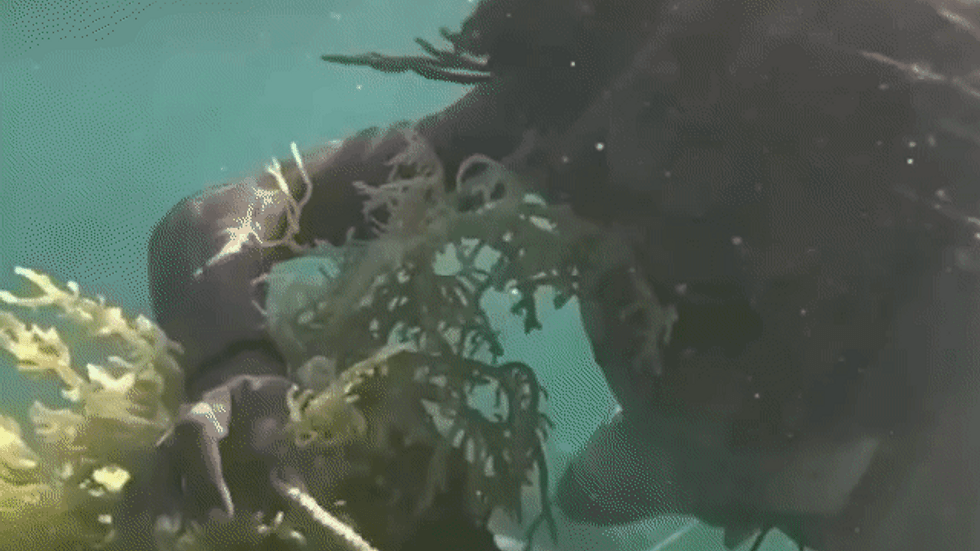
Sea moss is relatively easy to grow when conditions are right. It is cultivated in seawater, often attached to ropes, rafts, or other materials, and can be harvested continuously in fairly short cycles (6–8 weeks under good conditions). It can regrow after harvesting if the base is left intact, making it a renewable resource.
A sea moss farm can be started with small cuttings (often weighing 150–200 grams) tied onto ropes or another submerged material. There are various styles of doing this, and different factors impact how low or high sea moss is submerged. These factors include main currents, water temperature, and incoming sunlight.
Harvesting is done on mature sections, allowing for regrowth, or sea moss can be harvested completely and then “re-seeded.” A portion of what is harvested becomes planting material for further cultivation by simply re-attaching it to the apparatus.

The relatively fast harvesting cycles can support livelihoods without waiting too long for a payout and can provide additional income for fisherfolk and marine conservation organizations. They also create a sustainable product that is not “killed off” with each harvest, which is often the case with other industries such as intensive fishing.
What Regenerative Aquaculture Aims to Achieve
While some small-scale wild harvesting can be done carefully, as demand rises, large-scale harvesting of sea moss from the broader ocean can become extractive, resulting in:
Frequent harvesting in the same places. The accessible beds get visited repeatedly, and recovery time shrinks. Eventually, damage becomes serious.
Confusion about what’s being taken. “Sea moss” is often treated as just one thing, even though it includes different red seaweeds that vary in nature.
Less clarity about where sea moss comes from. This makes it harder to link the product back to the water conditions it grew in. This matters more than most people think because sea moss accumulates what’s in the water around it, including toxins.
Loss of food and habitat for other marine life. Other animals eat sea moss too. Grazing species that also eat sea moss can include urchins, surgeonfish, parrotfish, and turtles, among others.
Smart sea moss cultivation can maintain edible biomass in an area and create structure in the water column. By cultivating our own, we can leave more wild sea moss in place and even increase food availability in and around cultivation zones when the design is thoughtful.
This is why design matters: spacing, placement, and maintenance can allow grazers to feed while still leaving enough for regrowth and human harvest. We’ve seen this in action ourselves.
For example, in Jamaica, where floating farms were set up by our partner Kee Farms, the grazers didn’t take everything. They ate a little and left a lot—like in the wild. There was plenty to harvest and use as planting material for new sites.
We believe that with careful design and an open heart to the Life around us, we can obtain yields for people and a thriving marine ecosystem. Further down, we share some tools and resources with smart designs.
Sea Moss Reflects Its Water
Sea moss is an accumulator. It grows by taking up what’s in the water around it—nutrients, minerals, and whatever else is dissolved or suspended. That’s part of why seaweeds can be great sources of beneficial minerals. But it’s also why they can accumulate unwanted substances when grown near polluted water.
Cultivation allows us to choose ideal and safe waters for growing. Locations affected by heavy runoff, floodwater, sewage overflow, and agricultural discharge can create real contamination risks for sea moss and, by extension, the people consuming it.
While cultivation doesn’t automatically solve contamination, it does allow growers to choose sites away from runoff zones and even move farming sites when conditions change.
Potentially Difficult Factors to Design for in Sea Moss Cultivation
Placement Relative to Sensitive Habitats
The sea isn’t empty space. Seagrass beds and coral areas are living systems. A farm placed in the wrong spot can stress surrounding habitats through shading from rafts, trampling by humans, impacts from anchors, and more. Ecological awareness and wisdom are needed.
Weather, Loss of Equipment, and Debris
In hurricane territory, any marine farm needs a plan for strong winds, swell, and sudden weather shifts. Lost ropes and floats can become debris and pollute waters. This is a lesson we documented firsthand when our partner’s farm was destroyed after Hurricane Melissa in Jamaica.
Choosing Safe Materials for Farms and Avoiding Plastic
Oftentimes, the ropes and attachment apparatus used for sea moss farms are plastic. We don't feel comfortable with the extent of plastic use in the cultivation that we've seen. And we're hesitant to welcome an increase in ocean farms if it means an increase in ocean plastic.
This issue needs more research and design inspiration.
Sargassum Impacts
Pelagic sargassum events have affected many Caribbean coastlines. When sargassum piles onto a farm, it can smother lines, block light, and create low-oxygen conditions as it decomposes. A wise design would factor this in and also plan for sargassum seasons.
Different Types of Sea Moss and Common Misconceptions
“Sea moss” is an umbrella name for multiple different edible seaweeds with similar properties, but they can vary quite a lot. Sea moss is not one specific species. Common names you may hear are Kappaphycus, Eucheuma, and Gracilaria.
A second misconception (as we understand it) relates to Irish moss. People often label all sea moss as “Irish moss” and assign it the scientific name Chondrus crispus. In practice, Caribbean sea moss typically refers to tropical red seaweeds like Eucheuma and the others above, while Chondrus crispus is commonly known as a cold-water species, not a tropical seaweed.
The different types of sea moss don’t all grow the same. They vary in growth speed, sensitivity to heat, turbidity, and shifts in water salinity, as well as in their physical features like color and texture. Selecting the right species for the location is important.

Training Tools and Resources
We’ve collected some technical resources that support growers in planning good ocean farms. These resources will lay out a practical pathway you can follow whether you’re a first-time farmer, a community group, or a project lead.
Resources:
Sea Moss Cultivation in the Caribbean: A Practical Guide on Best Practices
Sea Moss Cultivation Training Videos A collection of short videos from the FAO and other sources. full playlist free on YouTube
In Closing
With the tools that we already have, we can create beautiful and productive aquacultures with sea moss that deliver ecosystem services while providing a useful yield for humans. The key is thoughtful design.
About Us
One Regeneration is a collective focused on embodying ways of being that are life-supporting and regenerative. We learn, practice, and share the arts of living more consciously. We offer courses and experiences in ecological design, Permaculture, and much more.

Quick Answers: Sea Moss Cultivation in the Caribbean (FAQ)
What is sea moss farming (ocean cultivation)?
Sea moss farming is growing sea moss on ropes or rafts in seawater so it can be harvested in cycles, then regrown from healthy base material left behind.
How long does sea moss take to grow?
Under good conditions, many farms harvest on short cycles—often 6–8 weeks—then replant or allow regrowth for the next cycle.
Does sea moss regrow after harvesting?
Yes, when harvested skillfully. If the base is left intact and conditions stay favorable, sea moss can regrow and remain renewable over repeated cycles.
Why does location matter so much?
Sea moss is an accumulator—it reflects the water it grows in. Site choice matters because polluted or runoff-affected waters can raise contamination risk.
How do you choose a safer sea moss site?
Avoid areas influenced by heavy runoff, sewage overflow, floodwater, and agricultural discharge. Avoid areas where rivers empty into the sea. Choose stable waters with good circulation and monitor seasonal shifts.
Do fish and turtles eat farmed sea moss?
Grazers can feed on sea moss around farms. Their impact does not need to be serious. Good design helps, and so does an acceptance that the oceans are a shared resource.
Is sea moss one species?
No. “Sea moss” is an umbrella name for multiple edible seaweeds. Common names you may hear include Kappaphycus, Eucheuma, and Gracilaria.
Is Caribbean sea moss the same as Irish moss?
Usually not. “Irish moss” is often used loosely, but Chondrus crispus is commonly known as a cold-water species, while Caribbean sea moss typically refers to tropical red seaweeds.


Comments